
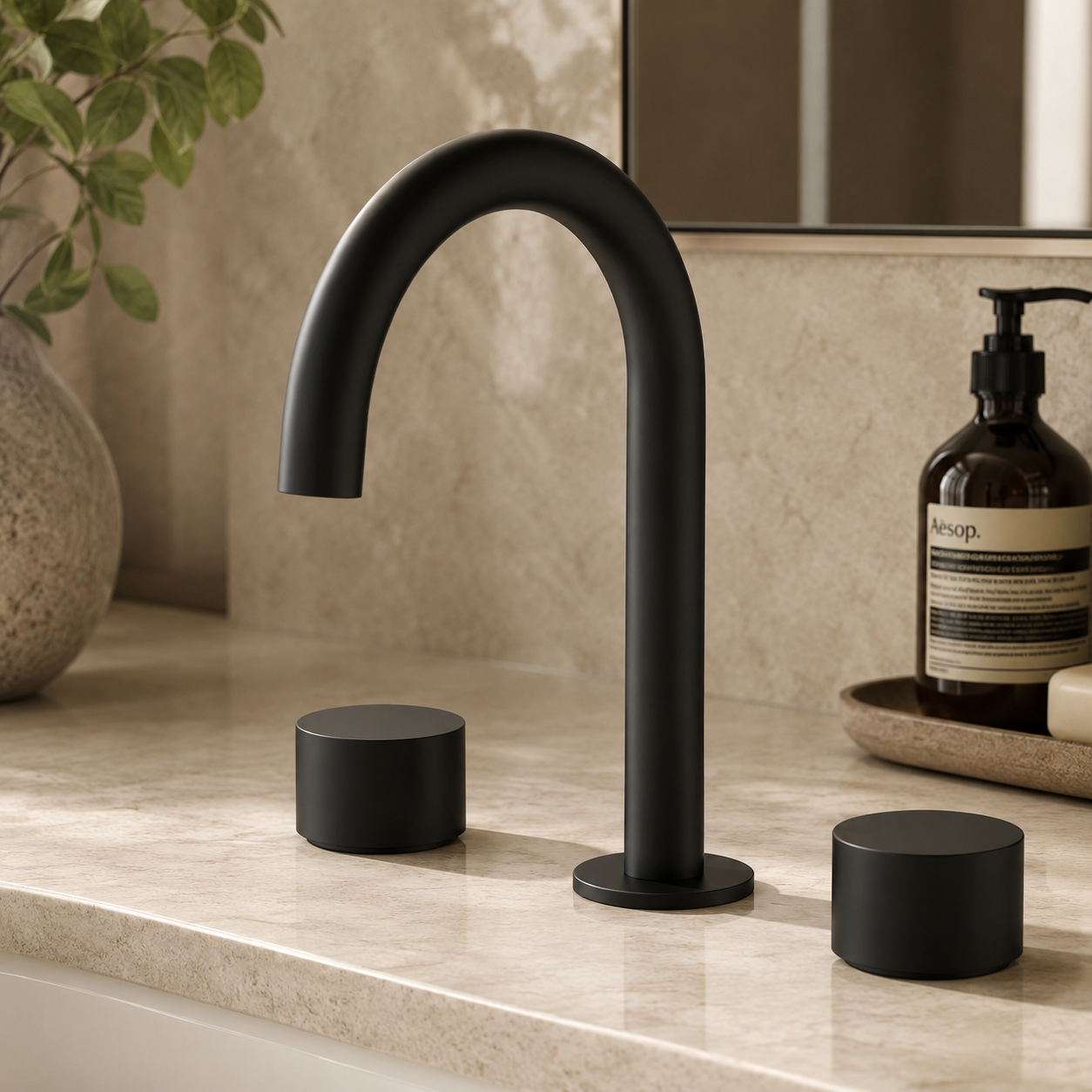
Most Australian homeowners don't think twice about the tap they turn on every morning. They choose it for style, finish, and price — and assume it's safe. But here's what no one is telling you: the tap currently sitting above your bathroom basin may be leaching small amounts of lead directly into the water your family drinks, brushes teeth with, and cooks with every day.
That's no longer acceptable under Australian law — and from 2026 onwards, it's not legal, either. The National Construction Code has introduced strict new rules around lead-free tapware in Australia, and if you're planning a bathroom renovation, building a new home, or simply replacing an old fixture, you need to understand what's changing, why it matters, and how to choose the right product. At Niche Interiors Australia, we supply premium tapware that meets the new lead-free standards — and this guide is your complete resource for navigating the 2026 changes with confidence.
What Is Lead-Free Tapware in Australia? Lead-free tapware in Australia refers to copper alloy plumbing products — taps, basin mixers, and valves — with a weighted average lead content of no more than 0.25%, as defined under Clause A5G4 of the National Construction Code (NCC). From 1 May 2026, manufacturers may only produce Lead-Free WaterMark certified products for use with drinking water.
Why Lead in Tapware Is a Problem
Traditional brass tapware — the dezincification-resistant (DZR) brass used in most Australian homes — has historically contained between 1.5% and 2.5% lead. This isn't a manufacturing defect. Lead was used deliberately because it makes brass easier to machine and cast into the intricate shapes required for high-precision plumbing fittings.
The problem is what happens after installation. Over time, even small amounts of lead can leach from the internal surfaces of taps and mixers into the water flowing through them — particularly when water has been sitting still in the tap overnight. This is called first-draw contamination, and it's invisible, tasteless, and odourless.
Did You Know? Studies show that children under six are most vulnerable to lead exposure. Even low levels can affect brain development, reduce IQ, and cause long-term behavioural issues. Lead in drinking water is a direct, preventable exposure pathway.
Australia's previous standard — the Australian Drinking Water Guidelines — allowed lead levels that, in hindsight, were too permissive. The new NCC rules bring Australia into alignment with the United States and Canada, which adopted strict low-lead plumbing standards years earlier.
What the NCC 2026 Changes Actually Mean
The National Construction Code (NCC) Volume Three — also known as the Plumbing Code of Australia (PCA) — has introduced Clause A5G4, which sets a strict new limit on lead content in copper alloy plumbing products intended for use with drinking water.
The Key Rule
Any copper alloy plumbing product that contacts drinking water must have a weighted average lead content of no more than 0.25%. This applies to the sum of all wetted internal surfaces — not just a single component.
The Critical Dates
|
Date |
What Changes |
Who Is Affected |
|
1 May 2023 |
Transition period begins; lead-free manufacturing permitted |
Manufacturers & suppliers |
|
1 May 2026 |
Manufacturers may ONLY produce Lead-Free WaterMark certified products |
All manufacturers, importers, distributors |
|
1 May 2028* |
Only lead-free products can be installed in drinking water systems nationally |
Licensed plumbers, builders, homeowners |
|
*Victoria |
Mandatory installation of lead-free products from 1 May 2026 |
All Victorian plumbing work |
Expert Recommendation: Even though most states have until 1 May 2028 for mandatory installation, choosing lead-free tapware now protects your family today and ensures you won't need to replace compliant-at-time-of-purchase fixtures when the national deadline arrives.
How to Identify Compliant Lead-Free Tapware in Australia
The most common mistake Australian homeowners make is assuming that a WaterMark label alone means a product is lead-free. It does not. Under the new rules, there are now two distinct certification marks — and they are not interchangeable.
The Two WaterMark Logos
• Standard WaterMark Logo — confirms the product meets general plumbing safety and performance standards. Does NOT confirm lead-free compliance.
• Lead-Free WaterMark Logo (LF WaterMark) — confirms the product meets Clause A5G4 of the NCC and contains no more than 0.25% weighted average lead. This is the mark you need.
Your Compliance Checklist When Buying Tapware
1. Look for the LF WaterMark logo on the product or packaging
2. Verify the WaterMark licence number against the official WaterMark Product Database (watermark.abcb.gov.au)
3. Ask your supplier or retailer for documentation of lead-free certification
4. Confirm the product is listed under the WaterMark Schedule of Products
5. Ensure your licensed plumber is aware of the new requirements before work commences
Pro Tip: Products marked with international lead-free designations (such as those meeting NSF/ANSI 61 in the US) are not automatically compliant in Australia unless they also carry the Lead-Free WaterMark. Always verify against the Australian WaterMark database.
Which Products Are Affected — and Which Are Exempt
Not all tapware and plumbing products fall under the new lead-free rules. The requirements apply only to copper alloy (brass or bronze) products that directly contact drinking (potable) water.
Products That Must Be Lead-Free Certified
• Basin mixers and tap sets (kitchen and bathroom)
• Wall-mounted and freestanding bath mixers used in potable water systems
• Sink mixers
• Valves, backflow prevention devices, and flow regulators in contact with drinking water
• Water metres and water dispensers
• Inline fittings and connectors supplying drinking water
Products Currently Exempt
• Showerheads — not in contact with drinking water as consumed
• Bath-only taps — where water is not intended for drinking
• Toilets, irrigation pumps, and dishwashers — non-potable systems
• Firefighting equipment and emergency fittings
• Stainless steel tapware — inherently lead-free by material composition
Common Mistake: Assuming your shower mixer is covered. Showerheads and some bath-only fixtures are currently exempt — but basin mixers in the same bathroom are not. Know which products in each room connect to drinking water.
Lead-Free Tapware Compliance Timeline: State-by-State
While the NCC provides a national framework, state and territory legislation governs how and when it is enforced locally. This means compliance dates are not uniform across Australia.
|
State / Territory |
Manufacturing Deadline |
Installation Deadline |
Status |
|
Victoria |
1 May 2026 |
1 May 2026 |
ACTIVE NOW |
|
QLD, NSW, SA, WA, TAS, ACT, NT |
1 May 2026 |
1 May 2028* |
Transition Period |
*Confirm current requirements with your state or territory plumbing authority. The ABCB publishes links to jurisdiction-specific transition information at ncc.abcb.gov.au.
Why Most Guides Get This Wrong
The majority of content circulating online about lead-free tapware Australia makes the same critical errors — and they could leave you non-compliant or confused when it matters most.
Myth 1: "WaterMark Certified Means Lead-Free"
False. Standard WaterMark certification has existed for decades and confirms general plumbing product safety — not lead content. You must look specifically for the Lead-Free WaterMark (LF WaterMark) logo. An old-format WaterMark sticker on a new-looking tap tells you nothing about its lead content.
Myth 2: "The Deadline Is in 2028 — I Have Time"
Partially false. The manufacturing deadline passed in May 2026 — meaning new stock entering the market from that date must already be lead-free certified. The 2028 date applies to installation of existing stock. If you're buying tapware for a renovation today, the products available should already be lead-free. Verify with your supplier.
Myth 3: "My Showerhead Needs to Be Lead-Free"
Currently incorrect under Australian rules. Showerheads are exempt because the water is not consumed. However, basin mixers and kitchen taps in the same renovation are not exempt. The boundary is potable water consumption — check product by product.
Myth 4: "I Can Just Buy Stainless Steel Tapware to Be Safe"
This is actually true — but it's missing a nuance. Stainless steel tapware is inherently lead-free and does not require the Lead-Free WaterMark under current rules. However, the product range and finish options in stainless steel are more limited than brass. For most bathroom renovations, Lead-Free WaterMark certified brass tapware remains the practical, design-flexible choice.
Comparison: Lead-Free Certified vs Standard Tapware
|
Feature |
Lead-Free WaterMark Certified |
Standard WaterMark (Pre-2026) |
|
Lead Content |
≤0.25% weighted avg |
Up to 2.5% (DZR brass) |
|
Legally Installable Post-2028 |
Yes |
No |
|
Installable Now (outside VIC) |
Yes |
Yes (until 30 Apr 2028) |
|
Safe for Children & Pregnancy |
Maximum safety |
Potential trace exposure |
|
Insurance & Liability |
Fully protected |
Potential exposure risk post-2028 |
|
Design Range |
Full range available |
Full range (legacy stock) |
|
Future Resale Value |
Positive — compliance documented |
May require disclosure or upgrade |
|
Bella Vista / Premium Brands |
Lead-Free Guarantee included |
Varies by product |
Best Choice: Lead-Free WaterMark certified tapware, regardless of your renovation timeline. Choosing compliant products now eliminates future upgrade costs, protects your family's health, and ensures your home remains market-ready as compliance becomes universally mandatory in 2028.
Expert Insight: What the Shift to Lead-Free Tapware Really Means for Australian Renovators
From a renovation planning perspective, the 2026 lead-free changes are arguably the most significant shift in bathroom product specification in decades. Here's what experienced industry professionals are observing on the ground:
• Premium brands are ahead of the curve. Established Australian tapware ranges — including those stocked at quality bathroom showrooms on the Gold Coast and Queensland more broadly — have largely completed their transition to lead-free brass formulations. Products that carry a Lead-Free Guarantee alongside WaterMark certification are the safest choice for any renovation starting now.
• Builder and plumber education is catching up, but slowly. Many licensed plumbers are still learning to distinguish between the old WaterMark and the new LF WaterMark. As a homeowner or renovation project manager, being informed enough to ask the right questions protects your project.
• PVD-finish tapware and lead-free certification go hand-in-hand. Physical Vapour Deposition (PVD) finishes — the durable, corrosion-resistant coatings used on premium brushed nickel, matte black, and French gold tapware — are typically applied over solid brass bodies. The best premium-finish tapware brands have engineered their brass alloys to be lead-free as part of their quality positioning, not just as regulatory compliance.
• Renovation budgets are not significantly impacted. The cost premium for lead-free certified tapware over legacy products is minimal at the point of purchase — and represents substantial savings compared to the cost of non-compliance, product removal, or liability exposure post-2028.
Quick Win: When browsing tapware for your renovation, filter by 'WaterMark' AND 'Lead-Free' or 'LF' in the product specifications. Any reputable Australian bathroom retailer will have this information available at the product level.
Frequently Asked Questions: Lead-Free Tapware Australia
1. What does "lead-free tapware" actually mean in Australia?
Under the NCC and Australian Building Codes Board (ABCB) definition, lead-free tapware means any copper alloy plumbing product — taps, mixers, valves — with a weighted average lead content of no more than 0.25% across all surfaces in contact with drinking water. This is a significantly stricter limit than the previous Australian standard, which permitted up to 2.5% lead in DZR brass.
2. Is my current tapware legal after May 2026?
If your existing tapware is already installed and functioning, the NCC changes are not retrospective — you are not required to immediately replace it. The new rules apply to products being manufactured, supplied, and installed from 2026 onwards. However, if you are renovating or replacing tapware now, you must use Lead-Free WaterMark certified products, particularly in Victoria where enforcement commenced 1 May 2026.
3. How do I check if a specific tapware product is lead-free certified?
Visit the official WaterMark Product Database at watermark.abcb.gov.au and search by brand, model, or WaterMark licence number. Products meeting the lead-free standard will be clearly identified. You can also look for the LF WaterMark logo on product packaging or ask your retailer for documentation. Never rely on a generic 'WaterMark certified' claim alone — look for the Lead-Free designation specifically.
4. Does the rule apply to basin taps AND kitchen taps?
Yes. Any tapware in contact with drinking water is subject to the new rules, including kitchen sink mixers, bathroom basin taps, and bar taps. Showerheads, bath-only fixtures, and non-potable water fittings (toilets, irrigation) are currently exempt. If you're unsure about a specific product, check the WaterMark Schedule of Products or consult your plumber.
5. Are there specific safe tapware brands in Australia that are already compliant?
Several premium Australian tapware brands have already completed their transition to lead-free certified ranges. When browsing at a specialist bathroom showroom, look for products explicitly listing a Lead-Free Guarantee alongside WaterMark/WELS certification. Solid brass construction with LF WaterMark certification is the benchmark for compliant, high-quality tapware in 2026 and beyond.
6. What happens if a plumber installs non-compliant tapware in Victoria after May 2026?
In Victoria, installing non-compliant tapware where lead-free products are required can result in enforcement and disciplinary action by the Building and Plumbing Commission, mandatory removal and replacement of non-compliant products, delays to occupancy certificates, and potential insurance implications. The compliance date is determined by when plumbing work commences — not when the building permit was issued.
7. Should Gold Coast homeowners choose lead-free tapware now?
Absolutely. While Queensland's mandatory installation deadline is 1 May 2028, the manufacturing deadline passed in May 2026, which means all newly available stock should already be lead-free. Choosing Lead-Free WaterMark certified tapware now — from a Gold Coast or Queensland bathroom specialist — protects your family's health, future-proofs your renovation, and ensures your home remains fully market-compliant as the 2028 deadline approaches.
8. Does choosing lead-free tapware cost significantly more?
No. The price difference between lead-free certified tapware and legacy stock is minimal, particularly from established Australian brands that have already completed their product transitions. At the premium end of the market, lead-free certification is standard. The real cost consideration is future compliance — replacing non-certified tapware after 2028 is far more expensive than choosing compliant products now
Conclusion: Safe Tapware Australia Starts With the Right Choice Today
The shift to lead-free tapware in Australia is not a future concern — it is a present reality. From 1 May 2026, the manufacturing landscape has changed permanently. Products entering the Australian market must now carry Lead-Free WaterMark certification. For homeowners, builders, and renovation professionals, the message is clear: choose certified, verify the LF WaterMark, and never assume a standard WaterMark label is enough.
Whether you're renovating a single bathroom or specifying tapware across a residential development on the Gold Coast, the principles are the same: protect your family's health, ensure compliance, and invest in products built to last. Niche Interiors Australia stocks premium tapware ranges that carry Lead-Free WaterMark certification and meet the 2026 NCC requirements — giving you style, performance, and peace of mind in one product.
Ready to Choose Safe, Certified Tapware for Your Renovation?
Visit Niche Interiors Australia or book a consultation with our team at our Gold Coast showroom. Our product experts can confirm Lead-Free WaterMark certification, guide you through compliant product selection, and help you create a bathroom that meets 2026 standards without compromising on design.
