
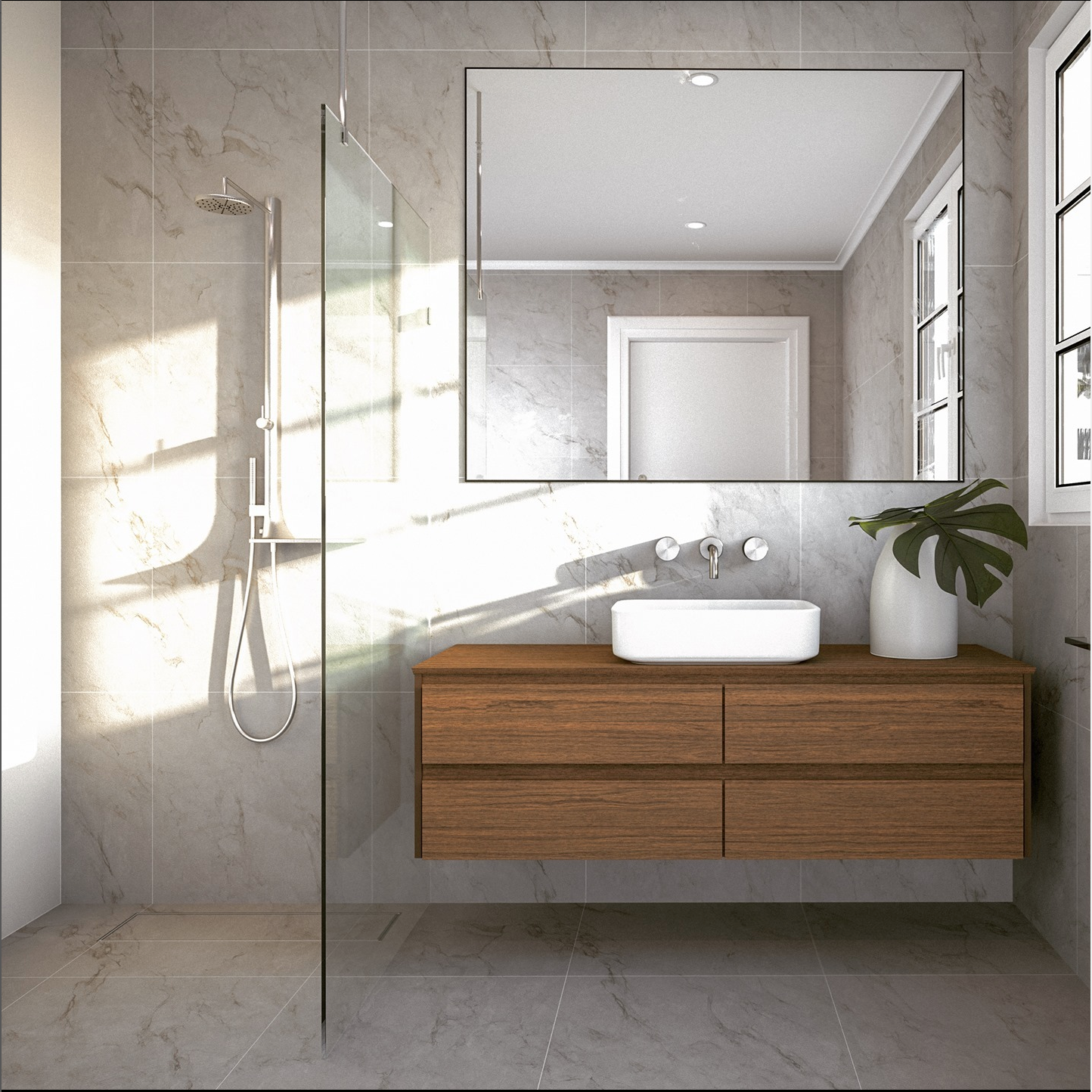
Standing in a shower screen aisle comparing frameless, semi-frameless, and sliding options is where most bathroom renovations quietly stall. Every supplier has an opinion, glass thickness sounds the same on paper, and the price gap between styles can run into the thousands. At Niche Interiors Australia, the Bundall showroom fields this exact comparison daily from Gold Coast and Brisbane homeowners trying to work out which screen suits their bathroom rather than just their budget.
Quick Answer: A frameless shower screen uses thick 10mm toughened glass with no perimeter frame for a seamless, premium look, typically costing more than a semi frameless shower screen, which uses slimmer glass with edge framing for extra support. Sliding shower screens suit tight or awkward layouts where a hinged door won't clear the space.
What's In This Guide
- The Core Differences
- Comparison Table
- Cost Breakdown
- Where Most Guides Get It Wrong
- Choosing the Right Screen for Your Layout
- Finding a Frameless Shower Screen Near Me
- FAQs
The Core Differences
A frameless shower screen is built from 10mm to 12mm toughened safety glass held by minimal brackets and hinges, giving an uninterrupted panel with no visible metal. A semi frameless shower screen uses thinner 6mm to 8mm glass supported by slim aluminium framing along the outer edges, adding stability and helping seal small or uneven showers. Sliding shower screens run on a top or bottom track instead of swinging open, making them the practical choice when a hinged door would clash with a vanity, toilet, or tight walkway.
Pro Tip: Every screen sold in Australia, regardless of type, must use Grade A safety glass compliant with AS 1288 and AS/NZS 2208. That's non-negotiable, so the real decision comes down to look, budget, and layout, not safety.
Which Screen Suits Your Bathroom
|
Feature |
Frameless |
Semi Frameless |
Sliding |
|
Glass Thickness |
10-12mm |
6-8mm |
6-8mm |
|
Typical Installed Cost |
$900-$2,500 |
$650-$1,400 |
$600-$1,200 |
|
Best For |
Master ensuites, design-led renovations |
Family bathrooms on a budget |
Tight layouts, walk-past access |
|
Cleaning |
Easiest, fewest edges |
Moderate, some frame to wipe |
Moderate, track needs attention |
|
Wall Tolerance |
Needs level walls |
More forgiving of uneven walls |
More forgiving of uneven walls |
Frameless wins on aesthetics and resale appeal, especially in open, well-lit master ensuites where the glass can run floor to ceiling uninterrupted. The semi frameless option is the practical middle ground most renovators land on, balancing a clean look with a friendlier price and easier fitting on walls that aren't perfectly straight. Sliding solves a layout problem more than a style one, working best where floor space in front of the shower is too tight for a door to swing open safely.
Cost Breakdown for Each Screen Type
Real installed pricing matters more than glass thickness on a spec sheet. A frameless shower screen typically runs $900 to $2,500 supplied and installed for a standard 900mm by 900mm corner shower, with larger spans and custom hardware pushing costs higher. The semi-frameless version generally sits between $650 and $1,400 for the same footprint, while sliding options often land at the lower end, from around $600 to $1,200, since the track hardware is simpler than frameless hinge sets.
Did You Know? The biggest hidden cost driver isn't the glass itself, it's custom sizing. Standard corner and alcove openings are the cheapest to quote, while angled walls, non-standard heights, or bath-to-shower conversions all add to labour and glass-cutting costs.
Where Most Buying Guides Get It Wrong
Most comparison articles treat this as a straight style decision, when it's really a layout decision first. A frameless shower screen looks stunning in photos, but if your bathroom door swings inward or your shower sits beside a narrow vanity run, a hinged frameless panel can genuinely make the room harder to use day to day. Guides also rarely mention that frameless glass needs dead-level walls to seal properly, so an older Queenslander or a home with settled floors may be better served by the small tolerance edge framing provides.
Expert Insight: Renovators chasing a frameless look in an awkward footprint often end up happier with a frameless-style sliding panel, which keeps the minimal-frame aesthetic while solving the clearance problem a hinged door creates.
Choosing the Right Screen for Your Layout
Match the screen type to how the bathroom is actually used, not just how it will photograph. A family bathroom with kids in and out several times a day benefits from the easier wipe-down of a frameless or semi frameless panel, while a compact ensuite with limited floor clearance is often better suited to a sliding configuration regardless of budget.
- Measure the clear floor space in front of the shower opening
- Check whether walls are level, particularly in older homes
- Decide if the screen needs to clear a vanity, toilet, or door swing
- Confirm your budget tier against installed pricing, not glass price alone
- Ask whether the supplier measures on site after tiling is complete
Finding a Frameless Shower Screen Near Me
Searching for “a frameless shower screen near me”, or specifically frameless shower screens Brisbane wide, usually returns a long list of glaziers with very different measuring and installation processes. Niche Interiors Australia's Bundall showroom displays all three configurations side by side, so Gold Coast and Brisbane homeowners can see the glass thickness and hardware finish in person before committing to a full renovation package.
Frequently Asked Questions
Q: What is the difference between a frameless and semi frameless shower screen?
A frameless shower screen uses thicker glass with no surrounding frame for a seamless look, while a semi frameless shower screen uses thinner glass supported by slim edge framing for a lower cost and easier fit on uneven walls.
Q: Are sliding shower screens cheaper than frameless screens?
Yes, sliding shower screens are generally the most budget-friendly option since the track hardware is simpler than the brackets and hinges a frameless panel requires.
Q: Is a frameless shower screen worth the extra cost?
For open, well-lit bathrooms and master ensuites, yes, since frameless glass is easiest to clean and tends to add the most resale appeal, though semi frameless delivers a similar look for less in most family bathrooms.
Q: Do sliding shower screens leak more than frameless ones?
Not when properly installed. Sliding screens rely on the track and seals rather than a swinging door, and a reputable installer will confirm water containment for your specific layout.
Q: Can I install a shower screen myself?
It's possible for experienced DIYers with framed screens, but frameless and semi frameless installations need precise levelling and drilling, so professional installation is strongly recommended.
Q: How do I find a frameless shower screen near me?
Search for local glaziers or bathroom showrooms that stock frameless, semi frameless, and sliding options, and visit in person so you can compare glass thickness and hardware finish before ordering.
Conclusion
Whichever configuration you land on, the right shower screen comes down to matching glass type and hardware to how your bathroom is actually laid out, not just chasing the most photogenic option. Niche Interiors Australia's Bundall showroom stocks frameless, semi frameless, and sliding shower screens together, so you can compare the real difference in person before your next renovation.
